


Camping Season Is Over, but the Moisture Risk Isn't: How to Protect Your Camping Equipment
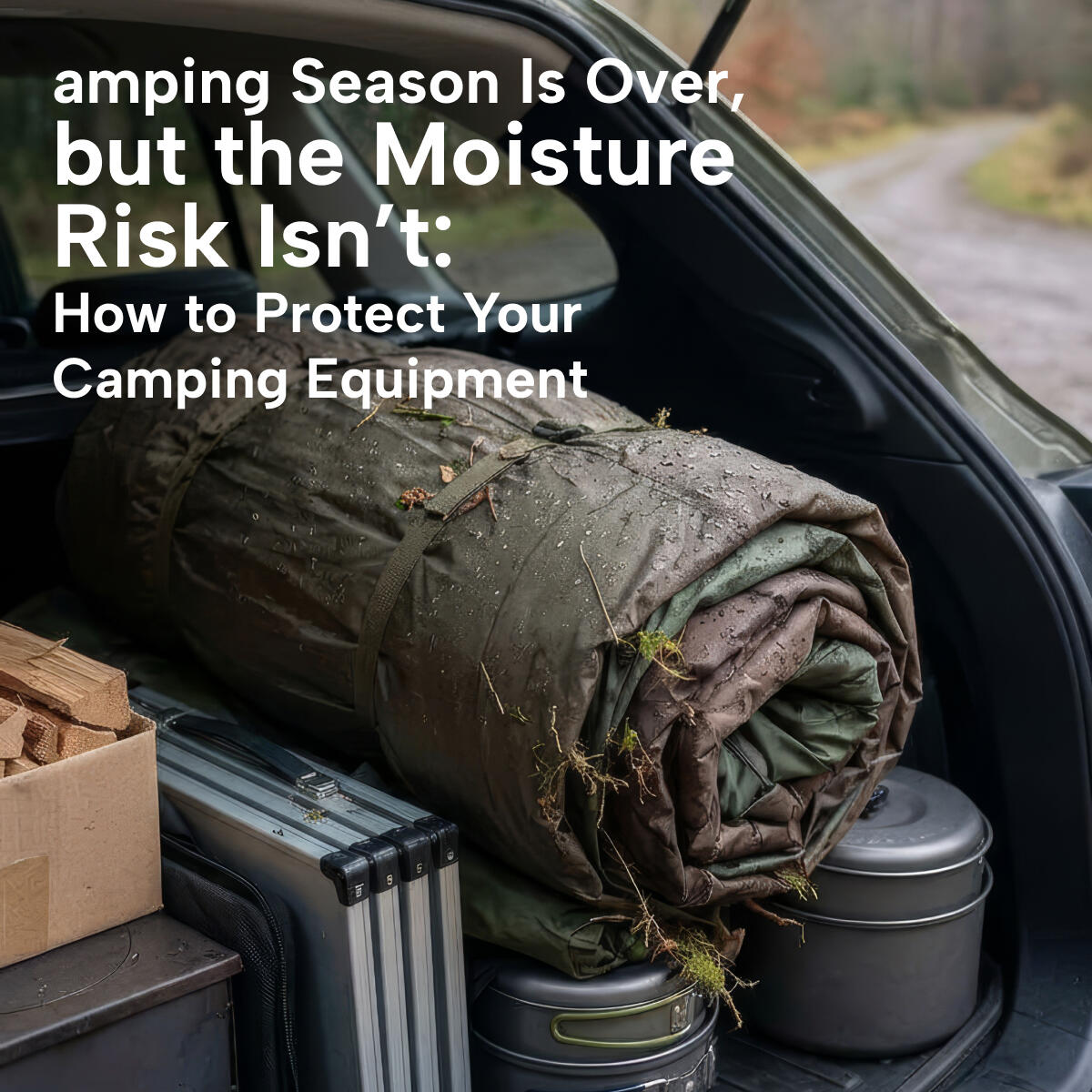
When the camping season ends, tents, sleeping bags, camping chairs, hammocks, and other equipment are usually put away unused for long periods. However, the rain, dew, damp ground, and high humidity that equipment is exposed to while camping can also cause problems during storage.
Camping equipment that is put away before it is completely dry, or left for long periods in poorly ventilated spaces, can develop moisture, unpleasant odours, and mould. That is why it is important to prepare your equipment properly at the end of the season and store it in suitable conditions.
Where Does Moisture in Camping Equipment Come From?
During use, camping equipment is directly exposed to outdoor conditions. Rain, dew, damp soil, and high humidity can cause moisture to build up in tents, sleeping bags, and other textile products.
The main factors that increase moisture problems during the off-season are:
- Packing away a wet tent before it has fully dried
- Not airing sleeping bags sufficiently after use
- Folding hammocks and camping textiles while still damp
- Storing wet camping footwear in enclosed spaces
- Keeping equipment in airless cupboards, boxes, or storage areas for long periods
Which Camping Equipment Can Be Affected by Moisture?
Moisture can affect not only tents but many other items of camping equipment that are stored for long periods.
Tents
Moisture remaining in the tent fabric or on its inner surfaces can create favourable conditions for unpleasant odours and mould when the tent is stored packed up for a long time.
Sleeping Bags
Sleeping bags are exposed to body moisture and ambient humidity during use. If they are stored without being dried properly, odour and moisture problems can develop over time.
Camping Chairs and Tables
Moisture can remain in the fabric of folding camping chairs. Storing them folded while damp for long periods can cause moisture to stay trapped in the fabric.
Hammocks and Camping Textiles
When hammocks, awnings, sunshades, and other fabric equipment are packed away damp, moisture can remain in the enclosed space for a long time.
Backpacks and Camping Footwear
Backpacks and camping footwear that come into contact with rain, dew, and damp ground while camping should also be checked for moisture at the end of the season.
How Should Camping Equipment Be Stored During the Off-Season?
A few simple steps before storage will help protect your camping equipment for longer.
1. Dry Your Equipment Completely
Before putting away tents, sleeping bags, hammocks, and other textile products, make sure they are completely dry. This step is especially important for equipment that has been used in the rain.
2. Do Not Store Damp Equipment in Enclosed Spaces
Placing damp tents or textiles directly into boxes, bags, or cupboards traps moisture inside.
3. Ventilate the Storage Area
Regularly ventilating the cupboards, storage rooms, garages, or other enclosed spaces where camping equipment is kept helps reduce moisture build-up.
4. Control Moisture in the Storage Area
If equipment will be stored in enclosed spaces for months, excess moisture in the environment needs to be kept under control. This is where moisture absorber packs can be used.
In particular, 125 g moisture absorber packs can be used in cupboards, boxes, and small enclosed spaces where tents, sleeping bags, hammocks, camping chairs, and other textile equipment are stored. For larger camping equipment storage areas, Absormix Industrial Moisture Absorber Packs may be preferred.
What Are the Benefits of Protecting Camping Equipment from Moisture?
Controlling moisture during the off-season helps ensure that your camping equipment is in better condition for the next season.
Moisture control:
- Helps reduce unpleasant odours.
- Helps reduce the conditions that favour mould growth.
- Supports the protection of textile and fabric equipment.
- Helps maintain a drier environment in enclosed storage areas.
- Helps you store your equipment in a more organised way at the end of the season.
Conclusion
When the camping season ends, simply cleaning your equipment and putting it into storage is not enough on its own. Storing tents, sleeping bags, hammocks, camping chairs, backpacks, and other camping gear protected from moisture is important for keeping your equipment in good condition for longer.
Drying equipment completely before storage, ventilating the storage area, and controlling moisture in spaces that remain closed for long periods help reduce moisture and odour problems during the off-season.
Absormix moisture absorber packs help keep excess moisture under control in the cupboards, boxes, storage rooms, and other enclosed spaces where camping equipment is kept.
That way, at the end of the camping season, you will not simply have put your equipment away; you will have stored it ready for the next season.
