


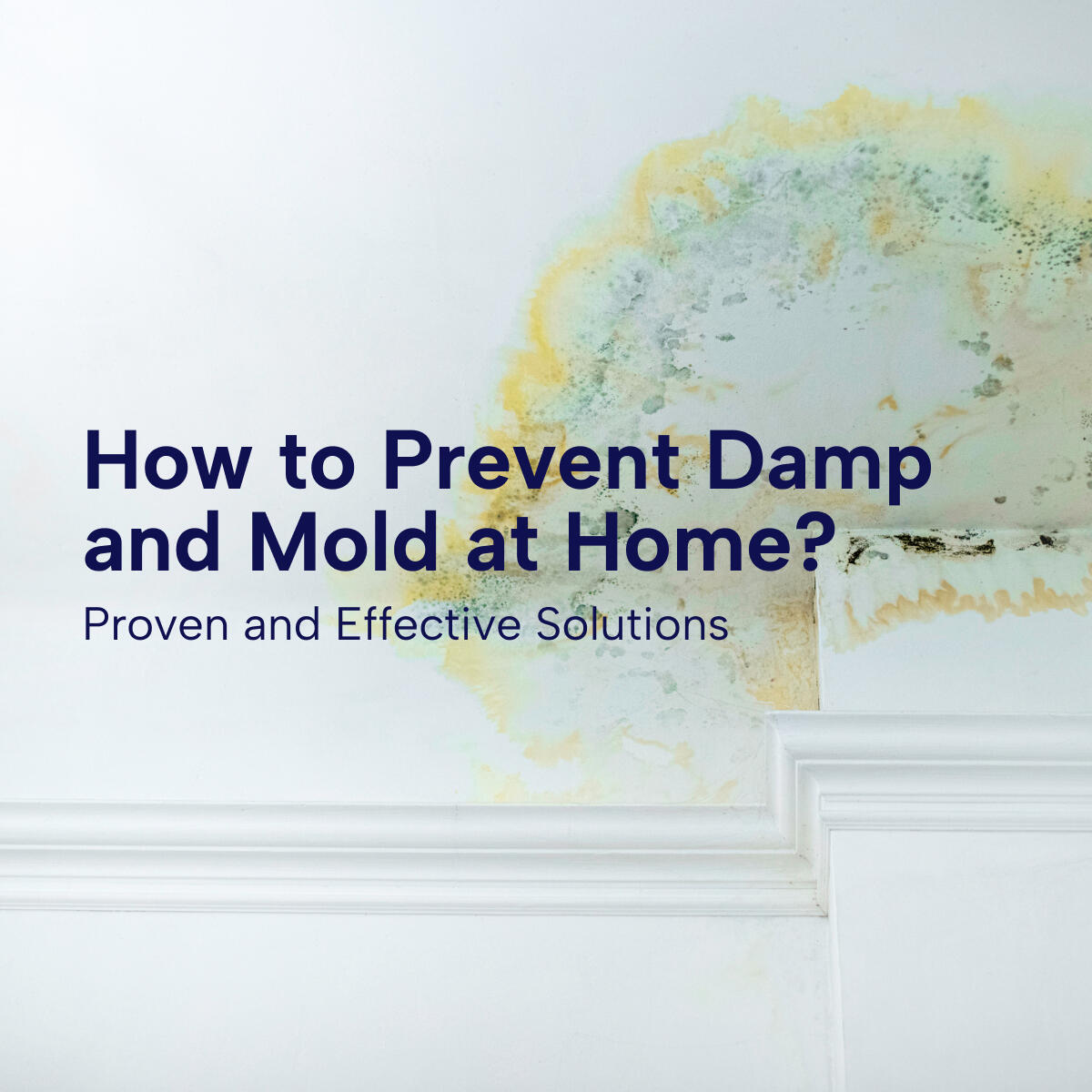
Dampness and mold growth at home are common problems, especially during the winter months and in areas with insufficient ventilation. Excessive humidity can cause unpleasant odors, peeling paint, damage to furniture and belongings, and reduced comfort in living spaces.
What Is Dampness?
Dampness refers to moisture accumulation on surfaces such as walls, windows, ceilings, and inside cabinets, often caused by condensation of water vapor in the air. If left uncontrolled, dampness can lead to mold growth, unpleasant odors, and damage to paint and plaster.
- Mold growth
- Musty odors
- Peeling or blistering paint and plaster
- Deterioration of wooden surfaces
- Moisture-related damage to belongings
What Causes Dampness in a Home?
Insufficient Ventilation
In poorly ventilated homes, air circulation is limited, preventing accumulated moisture from escaping. This increases the risk of dampness, particularly in bedrooms, bathrooms, and kitchens.
Drying Laundry Indoors
Drying clothes indoors can significantly increase humidity levels. This may cause moisture to accumulate on walls and inside wardrobes and cabinets.
Steam from Bathrooms and Kitchens
Steam generated during showering and cooking can accumulate indoors without proper ventilation, creating favorable conditions for mold growth.
Water Leaks
Plumbing leaks, roofing problems, or exterior wall defects can cause persistent moisture issues. Identifying and repairing the source of moisture is essential for a lasting solution.
Poor Thermal Insulation
Insufficient thermal insulation can cause condensation on walls. Dampness and mold are particularly common in rooms with exterior-facing walls.
Why Does Mold Grow?
Mold thrives in damp, poorly ventilated environments, particularly in areas with limited sunlight. Airborne mold spores can multiply rapidly when suitable conditions are present.
Mold is most commonly found in the following areas:
- Behind wardrobes and cabinets
- Around windows
- On bathroom ceilings
- In basements
- In pantries and storage areas
What Is the Ideal Humidity Level in a Home?
The ideal indoor relative humidity level is generally between 40% and 60%. Humidity levels above this range can increase the risk of mold growth and contribute to musty odors.
- Increased risk of mold growth
- Unpleasant odors
- Potential damage to clothing, furniture, and wooden surfaces
How to Get Rid of Musty Smells at Home
To permanently eliminate musty odors, the underlying source of moisture must first be addressed. Simply masking the smell provides only temporary relief.
- Ventilate rooms regularly.
- Clean mold-affected surfaces using appropriate methods.
- Repair water leaks promptly.
- Keep indoor humidity levels under control.
- Use moisture absorber packs in wardrobes, pantries, and rarely used rooms.
Why Use Moisture Absorber Packs?
Moisture absorber packs help absorb excess moisture from the air, contributing to a more balanced indoor environment. They provide a practical humidity control solution, especially in enclosed spaces with limited air circulation.
Moisture absorber packs can be used in the following areas:
- Wardrobes
- Pantries
- Storage rooms
- Bathrooms
- Rarely used rooms
- Caravans, boats, and vehicles
With regular use, moisture absorber packs can help reduce the risk of mold growth, prevent unpleasant odors, and maintain a fresher indoor environment.
How to Prevent Moisture Problems in Wardrobes
Moisture buildup inside wardrobes can cause unpleasant odors in clothing and damage fabrics over time. This problem is particularly common in wardrobes positioned against exterior walls.
- Make sure clothes are completely dry before storing them.
- Leave wardrobe doors open periodically to improve air circulation.
- Position wardrobes slightly away from walls to allow airflow.
- Use moisture absorber packs to help control excess humidity.
How to Prevent Mold Growth in Bathrooms
Bathrooms are among the most humid areas in a home. Therefore, removing steam and excess moisture after showering is essential for preventing mold growth.
- Ventilate the bathroom after every shower.
- Dry wet surfaces whenever possible.
- Use an extractor fan or ventilation system.
- Consider using moisture absorber packs inside bathroom cabinets.
Effective Ways to Prevent Dampness and Mold at Home
- Ventilate your home regularly.
- Dry laundry outdoors whenever possible.
- Remove steam and excess moisture from bathrooms and kitchens.
- Repair water leaks without delay.
- Have any thermal insulation problems inspected.
- Use moisture-absorbing products in wardrobes and enclosed spaces.
- Monitor indoor humidity levels regularly.
Conclusion: Effective Moisture Control Is the Key to Preventing Dampness and Mold
Dampness and mold are more than just cosmetic problems. They can reduce comfort in living spaces, cause unpleasant odors, and damage furniture and personal belongings. Therefore, maintaining proper indoor humidity levels is essential.
Moisture absorber packs are used in a wide range of environments, from homes and vehicles to caravans and boats, helping manage excess moisture. Designed for different needs, Absormix moisture absorber packs provide practical, effective, and easy-to-use humidity control solutions for enclosed spaces.

