


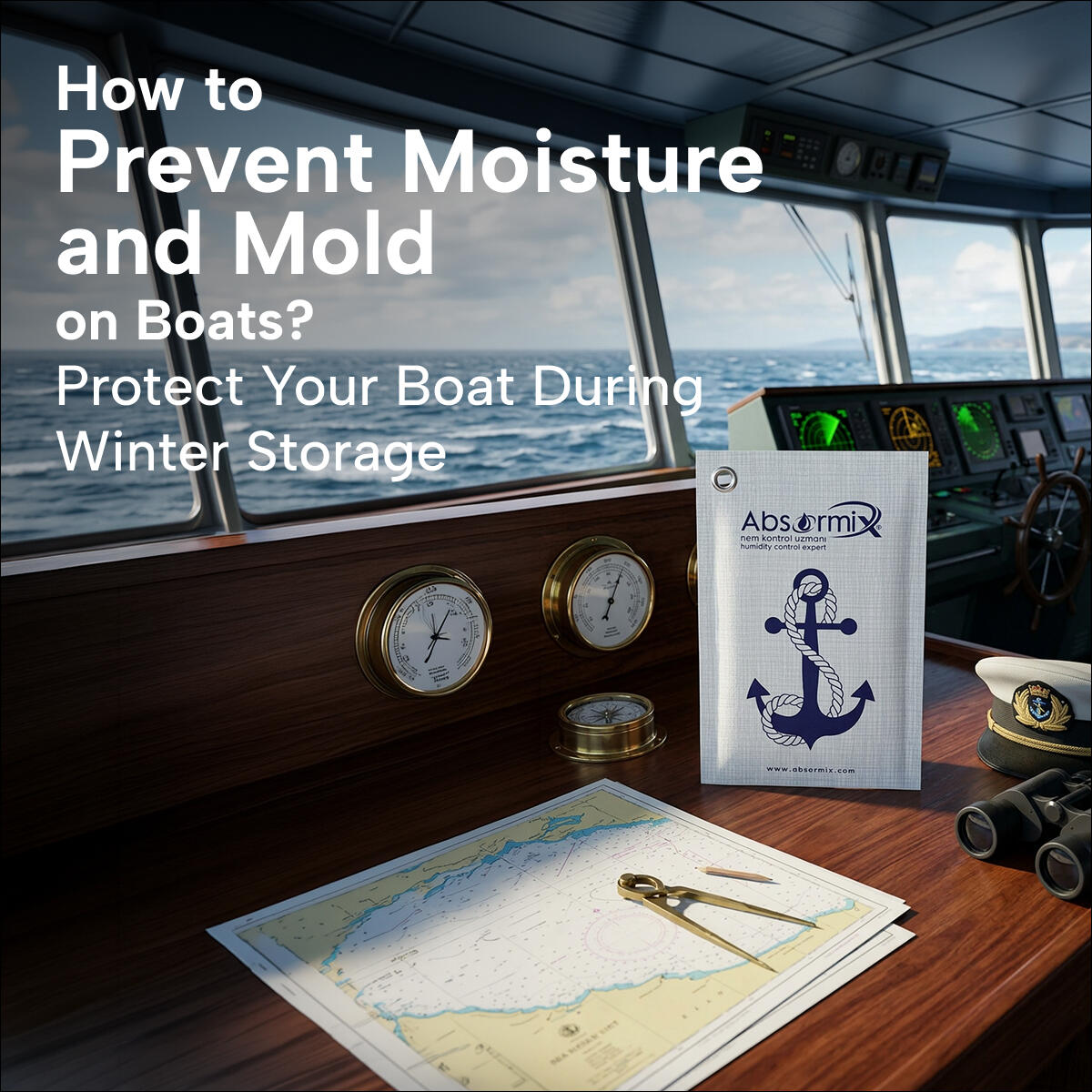
One of the most common challenges faced by boat owners is excess moisture. Boats operate in a naturally humid marine environment and are continuously exposed to moisture in the air. This issue often becomes more noticeable during periods when the boat is not being used.
If left unmanaged, excess humidity can eventually lead to:
- Mould growth
- Musty odours
- Damage to wooden surfaces
- Corrosion of metal components
For this reason, moisture management is an important part of overall boat maintenance.
Why Does Moisture Build Up on Boats?
Marine environments naturally contain high levels of humidity.
In addition, several factors can contribute to moisture accumulation.
Temperature Differences
Changes in temperature between day and night can lead to condensation.
Poor Ventilation
Air circulation is reduced when cabins remain closed for extended periods.
Exposure to Sea Air
Moisture from the surrounding marine environment can continuously enter the boat.
Extended Periods of Inactivity
When a boat is not used, trapped moisture may remain inside for long periods.
Where Does Mould Commonly Appear on Boats?
Mould tends to develop in areas where moisture accumulates.
Common locations include:
- Under bunks and beds
- Inside cupboards and lockers
- Cabin corners
- Cushions and upholstery
- Fabric surfaces
- Storage compartments
Why Do Boats Develop Musty Odours?
Many boat owners struggle to identify the source of persistent unpleasant smells.
In most cases, excess moisture is the primary cause.
Humid conditions can:
- Increase odour formation
- Encourage mould growth
- Create a stale cabin environment
This is why moisture control is often the key to solving odour-related problems.
What Is Winter Storage?
Winter storage refers to the period when a boat remains unused during the off-season.
Some boats may remain stored for:
- Three months
- Four months
- Six months
- Even longer periods
Whether stored in a marina or ashore, moisture control becomes particularly important during this time.
Why Does Moisture Increase During Winter Storage?
When a boat is not being used:
- Doors and hatches remain closed
- Air circulation decreases
- Condensation develops more easily
- Moisture becomes trapped inside
As a result, problems that were not visible at the end of the season may become apparent when the boat is reopened in spring.
Common Problems After Winter Storage
At the start of a new season, boat owners may encounter:
- Musty odours
- Mould growth
- Damp cushions
- Unpleasant smells inside lockers
- Damage or warping of wooden surfaces
Many of these issues are directly related to excessive humidity.
Can Moisture Affect Electronic Equipment on Boats?
Modern boats often contain a wide range of electronic systems.
Examples include:
- Navigation equipment
- Marine radios
- Sensors
- Control panels
Excess humidity can negatively affect these systems over time.
For this reason, both living areas and technical compartments should be protected from moisture.
The Risk of Corrosion on Metal Components
Marine environments already present a significant corrosion risk.
When high humidity is added, components such as:
- Hinges
- Locking mechanisms
- Electrical connections
- Metal fittings
may deteriorate more quickly.
How to Prepare Your Boat Before Winter Storage
Clean the Interior Thoroughly
Organic residues and materials that can retain moisture should be removed.
Dry Fabrics and Upholstery
Cushions, mattresses, and textiles should be completely dry before storage.
Inspect Cupboards and Lockers
Enclosed compartments should be checked regularly for signs of moisture.
Maintain Ventilation
Where possible, airflow should be encouraged throughout the boat.
Can Moisture Absorber Packs Be Used on Boats?
Yes.
Because boats contain enclosed living and storage spaces, they are particularly suitable for moisture control solutions.
Many boat owners use moisture absorber packs to help manage humidity levels during storage periods.
Moisture absorber packs can:
- Help reduce excess moisture
- Lower the risk of mould growth
- Reduce musty odours
- Support the protection of cabins, lockers, and storage compartments
How to Start the Boating Season Without Moisture Problems
Boat owners who take preventative measures during winter storage are more likely to enjoy:
- Cleaner cabins
- Fewer odour-related issues
- Reduced mould growth
- Better-protected equipment and furnishings
when the new season begins.
Conclusion
Moisture problems on boats are not simply a matter of comfort. Over time, excess humidity can affect equipment, interior spaces, and maintenance requirements.
Moisture absorber packs can help manage humidity levels during winter storage and periods of inactivity. Developed for a wide range of applications, Absormix moisture absorber packs provide practical solutions for helping to reduce dampness, mould growth, and unpleasant odours on boats.
