


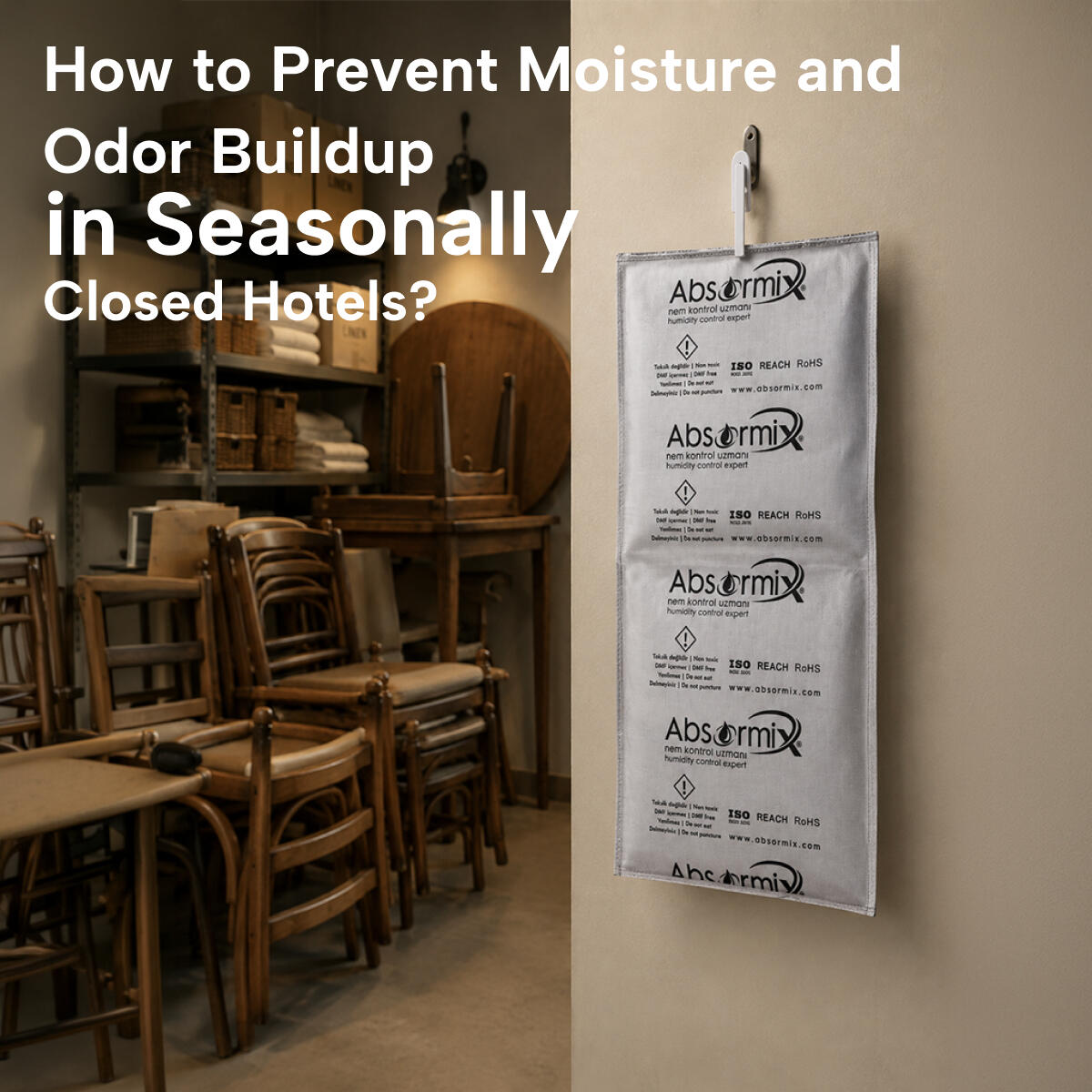
Many hotels in holiday destinations operate only during certain periods of the year and may remain closed for weeks or even months during the off-season. Without proper humidity management, moisture-related problems can develop before the next season begins.
Musty odours, mould growth, damp textiles, and poor storage conditions are among the most common issues found when hotels reopen after a long closure.
For this reason, end-of-season preparation involves more than cleaning and maintenance alone. Moisture management is also an essential part of the hotel winterisation process.
Why Does Moisture Build Up in Seasonally Closed Hotels?
When hotel operations stop:
- Guest rooms remain closed for extended periods.
- Air circulation is reduced.
- Humidity gradually accumulates indoors.
- Condensation may occur.
In coastal locations, naturally high outdoor humidity levels can accelerate this process.
Is the Risk Higher in Coastal Hotels?
Yes.
Hotels located near the sea are often exposed to:
- Higher relative humidity levels
- Constant exposure to marine air
- Faster moisture accumulation in enclosed spaces
As a result, humidity management becomes even more important during seasonal closures.
Common Problems Found Before Reopening
Hotels that have not been properly prepared may encounter:
- Musty-smelling guest rooms
- Mould inside wardrobes and cupboards
- Damp textiles and linens
- Unpleasant odours in storage areas
- Small mould patches
- Rooms that are not immediately ready for guests
These issues can result in additional costs and delays before reopening.
Where Does Moisture Commonly Develop in Hotel Rooms?
Wardrobes and Closets
Their enclosed design makes them prone to moisture accumulation.
Bed Bases and Under-Bed Areas
Air circulation is often limited in these spaces.
Curtains and Textiles
Fabrics may absorb moisture when rooms remain closed for long periods.
Storage Compartments
Small enclosed spaces inside guest rooms can also be affected by excess humidity.
Textile Storage Areas and Laundry Rooms
Textile storage areas are among the most important operational spaces within a hotel.
These areas often contain:
- Bed linen
- Towels
- Pillowcases
- Spare textile products
Excess humidity may negatively affect storage conditions and product quality.
Technical Areas and Electrical Rooms
Hotels contain numerous technical systems, including:
- Electrical panels
- Building automation systems
- Control rooms
- Maintenance and technical service areas
These spaces can also be affected by excessive humidity and should be included in any moisture-control plan.
How Should Hotels Be Prepared at the End of the Season?
Complete a Thorough Cleaning
Guest rooms and communal areas should be cleaned before closure.
Inspect Textile Products
Damp or insufficiently dried textiles should never be stored.
Check Wardrobes and Storage Areas
Potential sources of moisture should be identified and addressed.
Inspect for Water Leaks
Even minor leaks can develop into significant moisture problems over several months.
Where Can Moisture Absorber Packs Be Used in Hotels?
Moisture absorber packs can be used in a variety of areas during seasonal closures.
Guest Rooms
They can help manage humidity in rooms that will remain unoccupied for long periods.
Wardrobes and Closets
They may help reduce moisture build-up and unpleasant odours.
Textile Storage Rooms
They can contribute to the protection of stored linens and fabrics.
Technical Areas
They may help reduce moisture-related risks around sensitive equipment.
Storage Areas
They can support humidity control in enclosed storage spaces.
Why Are Industrial Moisture Absorber Packs Preferred?
Hotels often contain large enclosed areas that require higher-capacity moisture control solutions.
Absormix Industrial Moisture Absorber Packs can be particularly suitable for:
- Vacant guest rooms
- Textile storage areas
- Technical rooms
- General storage facilities
Their higher moisture absorption capacity can help reduce humidity-related issues throughout the closure period.
Starting the New Season in Better Condition
Taking appropriate precautions before closing can help hotels achieve:
- Faster room preparation before reopening
- Reduced odour problems
- Lower risk of mould growth
- Better protection for textile products
- Reduced maintenance requirements
Conclusion
Managing humidity levels in seasonally closed hotels is an important part of preparing for a successful reopening. Particularly in coastal regions, excess humidity can lead to unpleasant odours, mould growth, and storage-related issues over time.
Moisture absorber packs can help control excess humidity in guest rooms, textile storage areas, technical rooms, and storage facilities. Developed for a wide range of applications, Absormix moisture absorber packs and industrial moisture control solutions provide practical support for helping to reduce moisture-related problems during seasonal hotel closures.
