


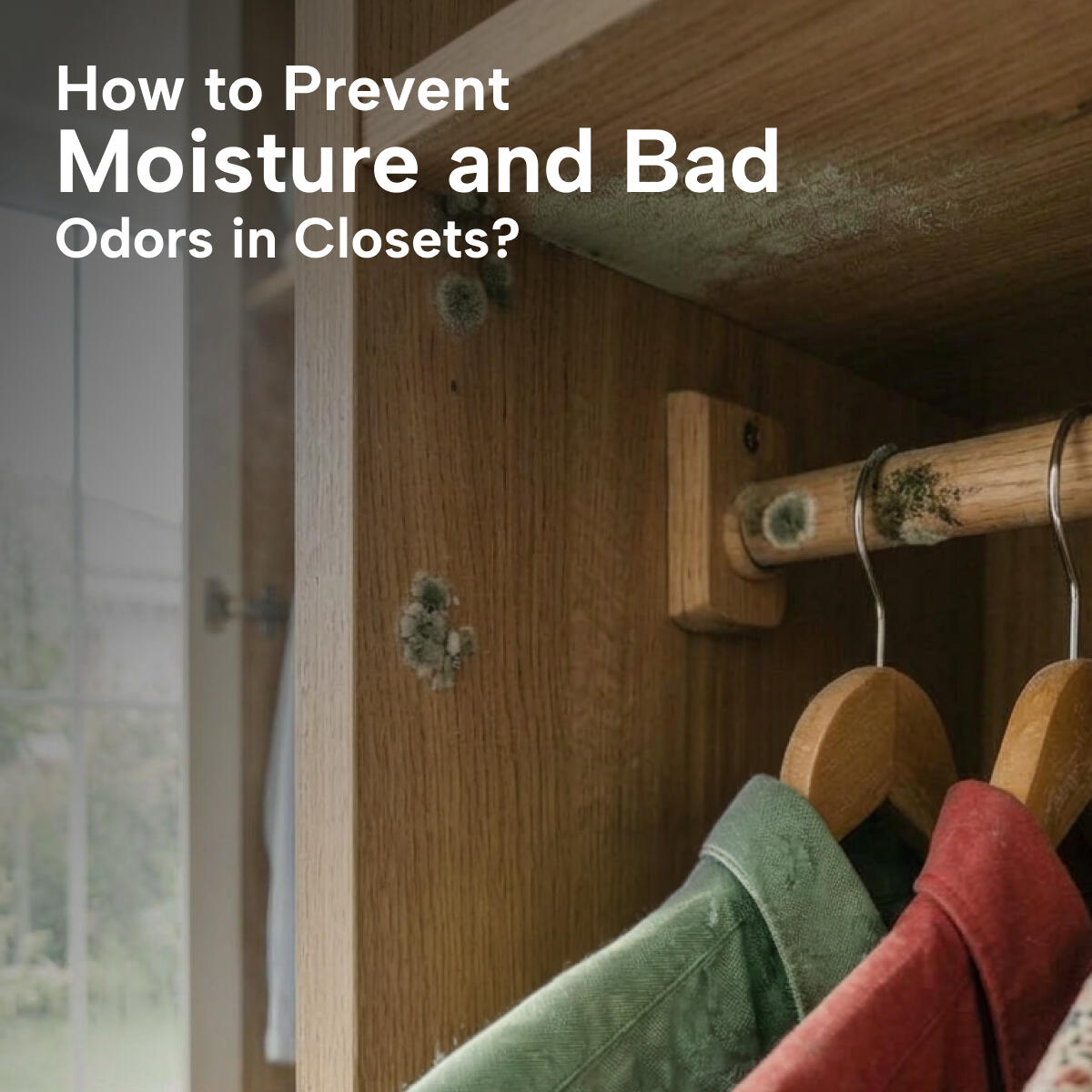
Opening a wardrobe and being greeted by a damp, musty smell is often a sign that excess moisture has accumulated inside. This issue is particularly common in wardrobes positioned against external walls and in cupboards that remain closed for extended periods.
What may initially seem like a minor odour can eventually lead to musty-smelling clothes, mould growth, and damage to stored belongings.
For this reason, it is important to understand why moisture develops inside wardrobes and how it can be prevented.
Why Does Moisture Build Up Inside Wardrobes?
Wardrobes are typically enclosed spaces with limited airflow. When humid air becomes trapped inside, condensation can develop over time.
The most common causes include:
Poor Air Circulation
Air cannot circulate properly in wardrobes that remain closed for long periods.
Placement Against External Walls
During colder months, temperature differences between indoor and outdoor surfaces can lead to condensation.
Storing Damp Clothing
Clothes that are not completely dry can increase moisture levels inside the wardrobe.
High Indoor Humidity
If humidity levels are high throughout the home, wardrobes are likely to be affected as well.
What Problems Can Moisture Cause Inside a Wardrobe?
Excess moisture does more than create unpleasant odours.
It can also lead to:
- Musty smells on clothing
- Mould growth
- Damage to leather goods
- Deterioration of wooden surfaces
- Damage to textiles and fabrics
How Can You Tell If There Is Excess Moisture in a Wardrobe?
The following signs may indicate a moisture problem:
- Musty-smelling clothes
- A damp odour when opening the wardrobe
- Small mould spots
- Discolouration on wooden surfaces
- A noticeable feeling of dampness
Taking action early can help prevent more serious issues from developing.
Why Do Clothes Develop Musty Odours?
One of the most common causes of unpleasant smells on clothing is excessive humidity.
This is especially true for:
- Seasonal clothing
- Garments stored for long periods
- Thick fabrics and textiles
These items are more susceptible to moisture-related odours when stored in damp conditions.
How Can Moisture Be Prevented Inside Wardrobes?
Ventilate the Wardrobe Regularly
Leaving wardrobe doors open periodically can improve airflow and reduce trapped moisture.
Avoid Storing Damp Clothing
Always ensure clothing is completely dry before placing it inside the wardrobe.
Leave Space Between the Wardrobe and the Wall
Allowing a gap between furniture and walls can improve air circulation.
Control Indoor Humidity Levels
The overall humidity level within the home directly affects wardrobes and enclosed spaces.
Why Are Moisture Absorber Packs Commonly Used in Wardrobes?
Because wardrobes are enclosed environments, moisture can accumulate more easily than in open spaces.
For this reason, many people use moisture absorber packs to help manage humidity inside wardrobes.
Moisture absorber packs can:
- Help reduce excess moisture
- Minimise unpleasant odours
- Lower the risk of mould growth
- Support the protection of clothing and stored belongings
Why Is Moisture Control Important in Wardrobes?
Wardrobes are often used to store not only clothing but also:
- Leather goods
- Handbags
- Footwear
- Delicate textiles
Maintaining appropriate humidity levels can help preserve these items and extend their lifespan.
Are Wardrobes More Vulnerable During Seasonal Changes?
Yes.
During autumn and winter:
- Temperatures decrease
- Ventilation is often reduced
- Condensation becomes more common
As a result, moisture can accumulate more quickly inside wardrobes and cupboards.
What Should You Do If Mould Appears?
The first step is to identify the source of excess moisture.
Simply removing visible mould is not enough.
If humidity levels remain uncontrolled, mould may return and the problem can continue to worsen over time.
Practical Tips for Controlling Moisture in Wardrobes
- Empty and ventilate wardrobes regularly
- Avoid storing damp clothing
- Ensure seasonal items are completely dry before storage
- Improve airflow within the room
- Consider using moisture absorber packs in enclosed spaces
Conclusion
Excess moisture inside wardrobes can eventually lead to unpleasant odours, mould growth, and damage to stored belongings. Identifying the issue early and taking preventive action is essential.
Moisture absorber packs are commonly used in wardrobes, cupboards, and storage areas to help manage excess humidity. Designed for a variety of applications, Absormix moisture absorber packs can support the protection of clothing and stored items by helping to maintain more suitable storage conditions.
