


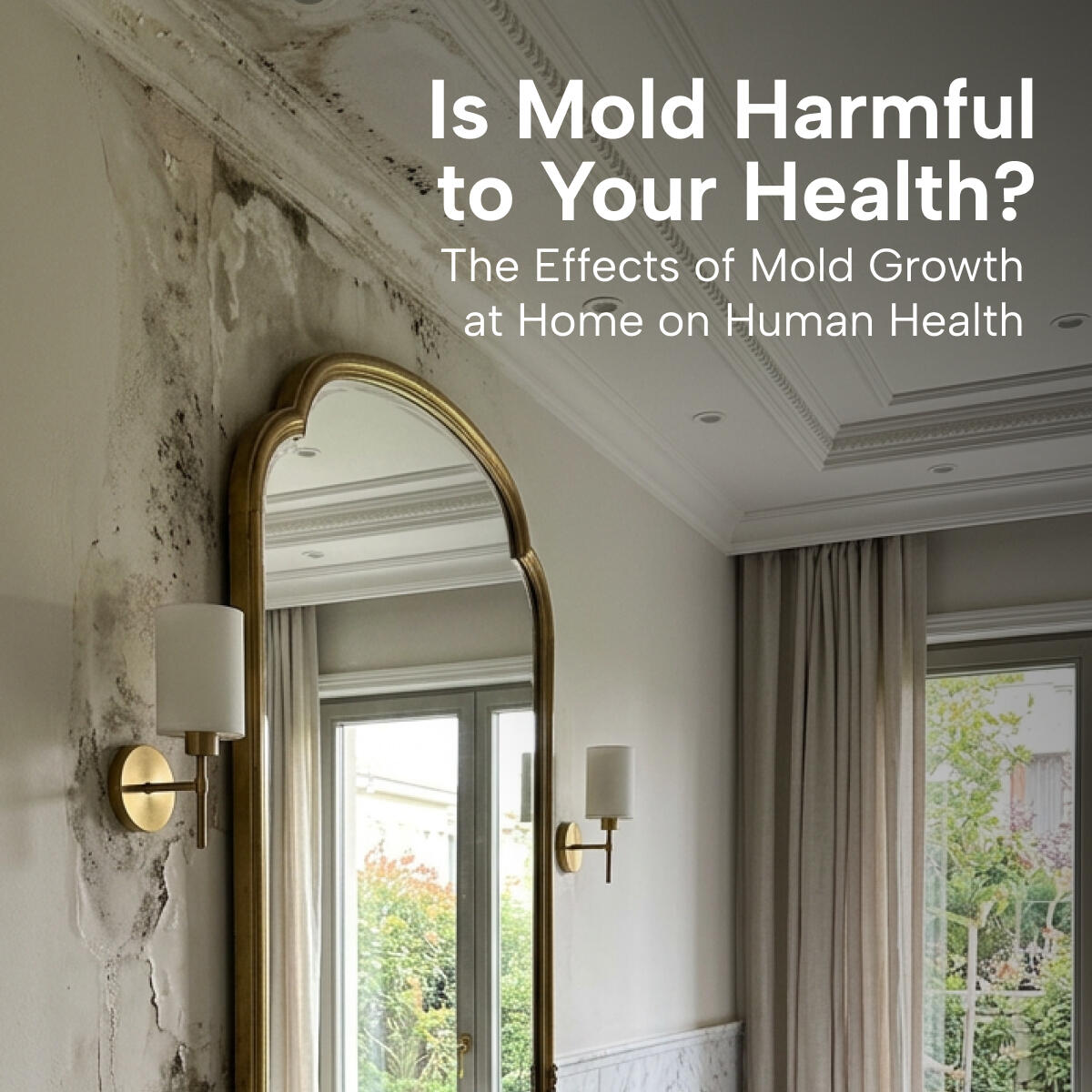
Mould growth in homes is often viewed as purely a cosmetic issue. However, mould can negatively affect indoor air quality and reduce the comfort of living spaces.
In many cases, unnoticed moisture problems create the ideal conditions for mould to develop over time. For this reason, understanding why mould forms and how it can be prevented is important for maintaining a comfortable home environment.
What Is Mould?
Mould is a type of microscopic fungus that develops in damp environments.
Mould spores naturally exist in the environment. However, when high humidity, poor ventilation, and suitable temperatures are present, they can begin to multiply.
Mould is commonly found on:
- Walls
- Ceiling corners
- Bathroom surfaces
- Window frames
- Inside wardrobes and cupboards
What Causes Mould Growth?
The primary cause of mould growth is excessive moisture.
The following factors can contribute to mould development:
Poor Ventilation
In enclosed spaces, moisture cannot easily escape and may accumulate over time.
Water Leaks
Leaks from plumbing systems or roofs can create a constant source of moisture.
Condensation
Differences between warm and cold air can cause water droplets to form on surfaces.
High Indoor Humidity
Persistently high humidity levels can make mould growth more likely.
How Does Mould Affect Living Spaces?
Mould does more than create an unpleasant appearance.
It can also:
- Cause musty odours
- Damage paint and plaster surfaces
- Affect wooden furniture and materials
- Reduce the lifespan of household belongings
For this reason, it is important not only to remove visible mould but also to address the underlying cause.
Mould and Indoor Air Quality
Indoor air quality may gradually decline in environments where mould is present.
This is particularly noticeable in:
- Enclosed rooms
- Basements
- Rarely used spaces
where mould-related odours can become more concentrated.
As a result, overall comfort within the living environment may be reduced.
Signs of Mould Growth in the Home
The following signs may indicate the early stages of a mould problem:
- Persistent musty smells
- Black spots on walls
- Peeling or blistering paint
- Damp surfaces
- Strong odours inside cupboards and wardrobes
Identifying these signs early can help prevent the problem from becoming more widespread.
Where Is Mould Most Commonly Found?
Bathrooms
Due to frequent steam and moisture, bathrooms are among the most common locations for mould growth.
Kitchens
Steam produced during cooking can increase indoor humidity levels.
Wardrobes
Limited airflow inside wardrobes can encourage moisture build-up and mould formation.
Basements
Basements often have naturally higher humidity levels than other parts of the home.
Storage Areas
Moisture can accumulate in spaces that remain closed for extended periods.
How Can Mould Be Prevented?
Ventilate Regularly
Fresh air circulation helps maintain balanced humidity levels.
Identify the Source of Moisture
Water leaks and condensation problems should be investigated and addressed.
Monitor Humidity Levels
Maintaining appropriate indoor humidity levels is essential for moisture control.
Clean Affected Areas
When mould appears, affected surfaces should be cleaned promptly and appropriately.
Can Moisture Control Help Reduce Mould Growth?
Because excess moisture is the primary cause of mould growth, controlling indoor humidity can help reduce the likelihood of mould developing.
This is particularly important in:
- Wardrobes
- Pantries
- Storage rooms
- Rarely used rooms
where moisture absorber packs can help manage excess humidity.
Mould Problems in Wardrobes and Cupboards
In many homes, the first signs of mould appear inside wardrobes and cupboards.
Musty-smelling clothing and small dark spots are often associated with elevated moisture levels.
Moisture absorber packs used in these areas can:
- Help protect clothing and fabrics
- Support the reduction of unpleasant odours
- Help lower the risk of mould growth
Common Mistakes When Dealing with Mould
One of the most common mistakes is removing visible mould without addressing the underlying moisture problem.
If the source of excess humidity remains:
- Mould may return
- Musty odours may persist
- The problem can gradually worsen
Long-term mould prevention requires effective moisture management.
Conclusion
Mould is one of the most common consequences of excessive moisture and can significantly affect the comfort of living spaces. For this reason, it is important not only to remove visible mould but also to identify and eliminate the source of the problem.
Moisture absorber packs used in homes, wardrobes, and enclosed spaces can help manage excess humidity. Designed for a variety of applications, Absormix moisture absorber packs provide practical support for reducing moisture-related issues and helping to prevent mould formation.
