


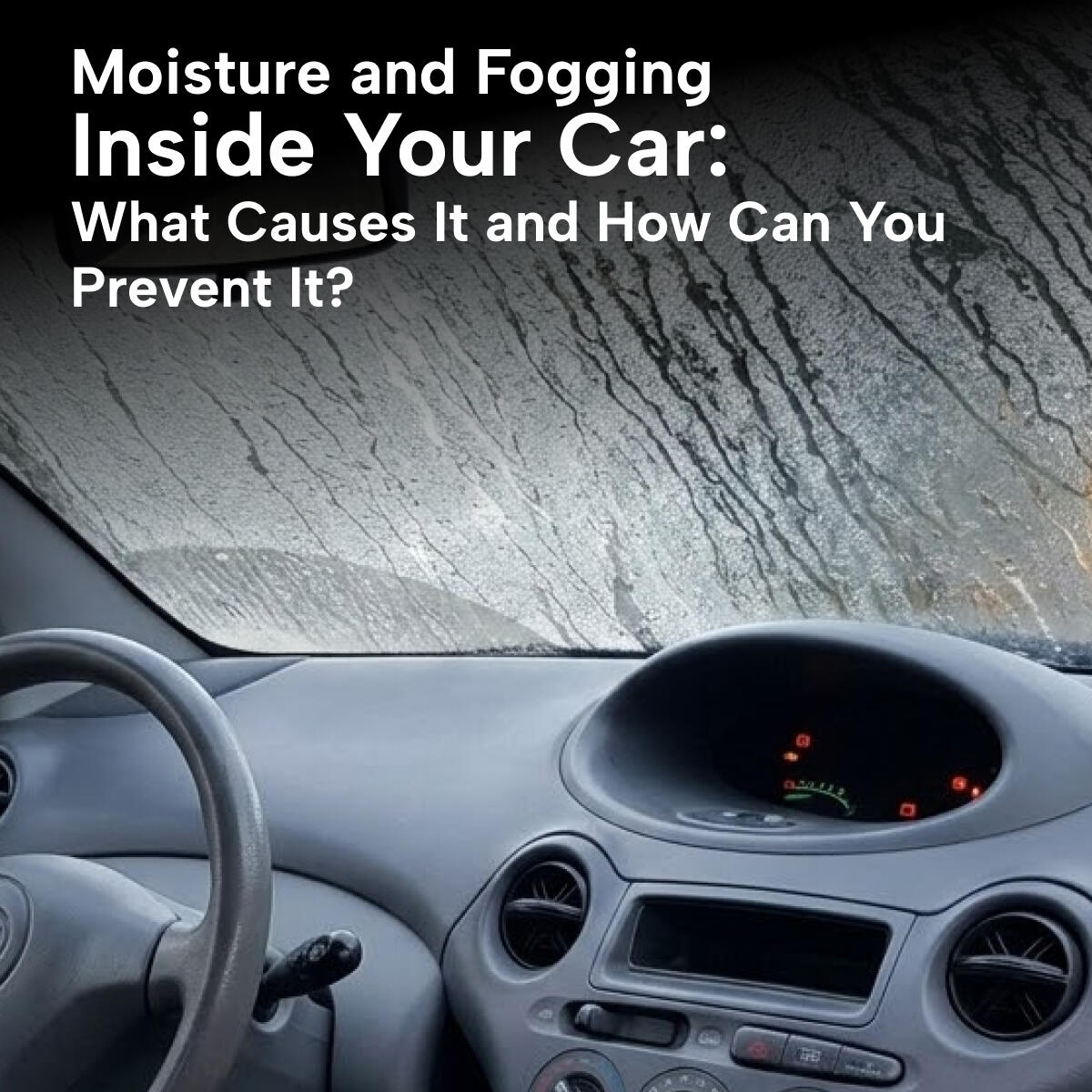
One of the most common issues drivers face during autumn and winter is condensation on vehicle windows. Stepping into your car in the morning and finding the windscreen fogged up can affect not only driving comfort but also road safety.
In most cases, condensation is caused by excessive moisture inside the vehicle. If left unmanaged, high humidity levels can also contribute to unpleasant odours, damage to upholstery, and damp-related problems.
Why Do Car Windows Fog Up?
Condensation occurs when warm, moisture-laden air inside the vehicle comes into contact with cold glass surfaces.
The moisture in the air condenses into tiny water droplets, making the glass appear foggy.
This is particularly common:
- During cold weather
- On rainy days
- In the early morning
- In vehicles that have been parked for extended periods
What Causes Moisture Inside a Vehicle?
Wet Floor Mats
Water brought into the vehicle during wet weather can evaporate and increase humidity levels.
Damp Shoes and Clothing
Wet clothing and footwear are common sources of moisture inside the cabin.
Water Leaks
Faulty door seals, window seals, or leaks around the boot area can introduce unwanted moisture.
Air Conditioning and Ventilation Issues
Dirty or blocked filters may prevent humid air from being properly removed from the vehicle.
Vehicles Left Unused for Long Periods
When a vehicle remains closed for extended periods, airflow decreases and moisture can accumulate.
Signs of Excess Moisture Inside a Car
The following signs may indicate a moisture problem:
- Frequent window condensation
- A strong musty odour
- Damp seats or upholstery
- Wet floor mats
- Moisture inside the boot
- Signs of mould on interior surfaces
What Problems Can Excess Moisture Cause?
High humidity levels do more than create condensation.
They may also:
- Cause unpleasant odours
- Damage upholstery and interior materials
- Encourage mould growth
- Reduce overall driving comfort
How Can You Prevent Window Condensation?
Use the Air Conditioning System Regularly
Air conditioning can help control humidity levels throughout the year, not only during summer.
Improve Air Circulation
Allowing fresh air to circulate through the vehicle can help reduce moisture build-up.
Check the Cabin Air Filter
A dirty cabin filter can restrict airflow and affect moisture control.
Avoid Leaving Wet Items Inside the Vehicle
Umbrellas, coats, and damp equipment should not be stored in the vehicle for long periods.
Why Is Moisture Control Important in Vehicles?
Maintaining balanced humidity levels inside a vehicle can help:
- Reduce window condensation
- Minimise unpleasant odours
- Protect upholstery and interior materials
- Create a more comfortable driving environment
Why Does the Problem Increase During Winter?
During the winter months:
- Rainfall becomes more frequent
- More moisture is carried into the vehicle
- The temperature difference between the interior and exterior increases
As a result, condensation is more likely to occur.
Moisture Problems in Vehicles Left Parked for Long Periods
Vehicles that remain unused for extended periods often experience reduced air circulation.
This may lead to:
- Musty odours
- Mould growth
- Persistent window condensation
For this reason, moisture control is particularly important for vehicles stored in garages or used seasonally.
Can Moisture Absorber Packs Be Used in Vehicles?
Yes.
Because vehicles are enclosed spaces, excess humidity can easily accumulate inside.
Many drivers therefore choose to use moisture absorber packs in their vehicles.
Moisture absorber packs can:
- Help reduce excess moisture
- Support the reduction of window condensation
- Help prevent unpleasant odours
- Improve overall cabin comfort
How Can You Prevent Musty Smells in a Vehicle?
To eliminate musty odours effectively, the source of moisture must first be identified.
Recommended steps include:
- Locating and repairing water leaks
- Checking the ventilation and air conditioning systems
- Ensuring humidity levels remain under control
Using air fresheners alone may mask the smell temporarily but will not resolve the underlying cause.
Conclusion
Moisture and window condensation are common issues, particularly during autumn and winter. However, with the right preventive measures, it is possible to reduce condensation and minimise the risk of unpleasant odours and damp-related problems.
Moisture absorber packs can help manage excess humidity inside vehicles and support a more comfortable driving environment. Designed for a wide range of applications, Absormix moisture absorber packs offer practical solutions for helping to control moisture and dampness inside cars.
