


Moisture is one of those problems that often starts out barely noticeable in a business but can turn into significant costs over time.
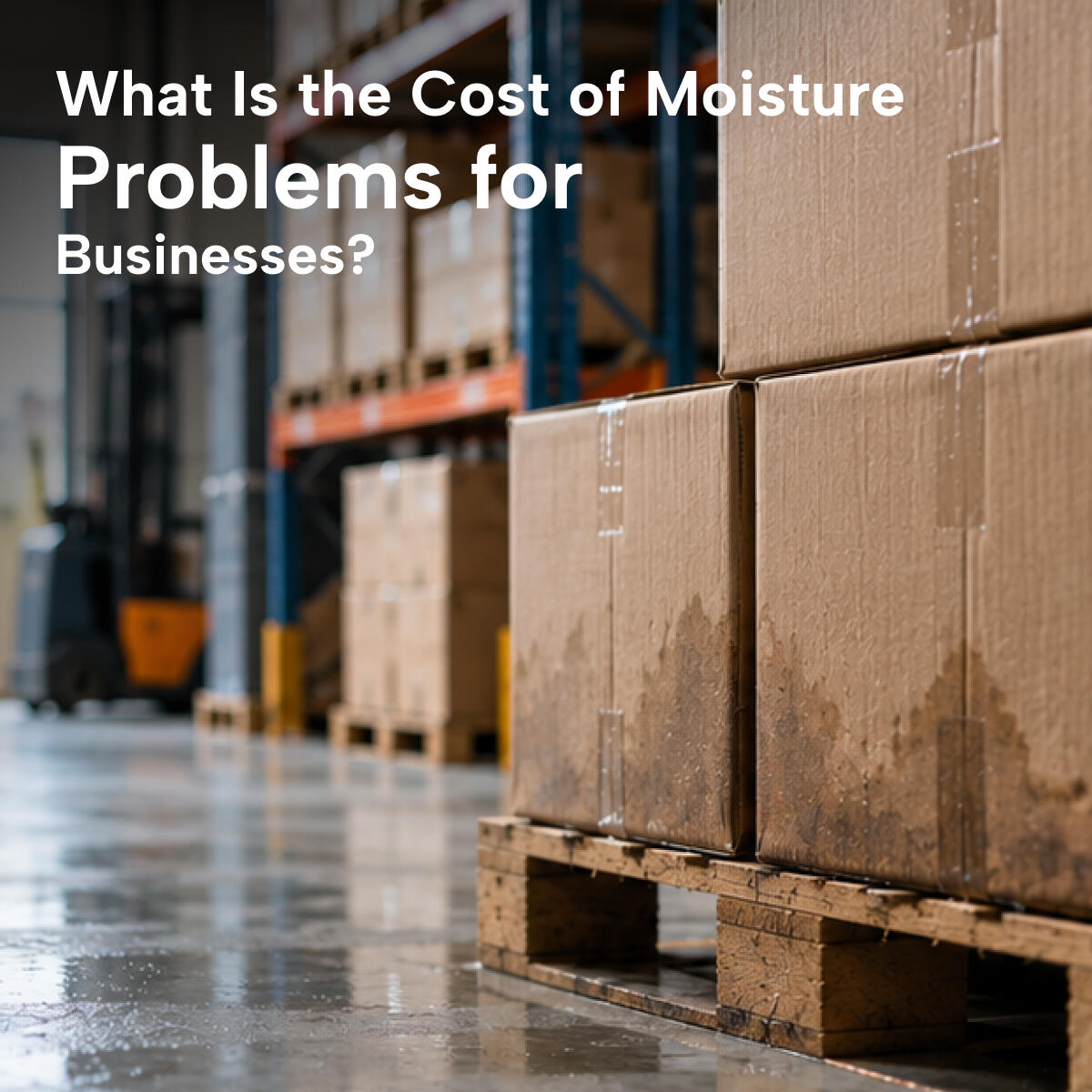
Moisture in a warehouse does not stay only on the walls or in the air. Many different materials can be affected by moisture, from textiles to packaging, electronic equipment to vehicles, and furniture to stock items.
What is more, the cost of moisture does not always appear as direct damage to a product. Extra cleaning, maintenance, product replacement, customer complaints, and operational losses all add to the true cost of moisture for a business.
How Does Moisture Create Costs for Businesses?
Moisture-related costs should be considered under several different headings.
1. Product and Stock Losses
Uncontrolled moisture in warehouses or stock areas can cause:
- Unpleasant odours and deterioration in textile products
- Deformation of cardboard and packaging
- Mould growth on stored products
- Damage to furniture and wooden materials
- Moisture-related risks to sensitive equipment
Damage to a product does not simply mean losing the cost of that product. Repurchasing it, transporting it, and reorganising operations also create additional costs.
2. Maintenance and Repair Costs
Moisture can create additional maintenance requirements for equipment and building components, particularly in areas that remain closed for long periods.
Electrical panels, control cabinets, electronic equipment, and various metal parts may be at risk in humid environments.
Without moisture control, a business's maintenance and repair expenses can increase.
3. Cleaning Costs
Moisture-related odours and mould growth can mean extra cleaning for businesses.
In large facilities such as the following, repeated cleaning creates costs in terms of both labour and time:
- Hotels
- Gyms
- Warehouses
- Vehicle stock centres
- Textile businesses
4. The Cost of Unusable Space
When an area cannot be used because of a moisture problem, this can translate directly into lost revenue for the business.
For example, an unusable room in a hotel, an unusable section of a warehouse, or an area temporarily taken out of service in a production facility reduces the business's capacity.
For this reason, the cost of moisture should not be measured by physical damage alone.
5. Customer Satisfaction and Brand Perception
Particularly in the hotel, retail, vehicle sales, and service sectors, a damp or musty odour encountered by customers can directly affect how a business is perceived.
A clean, dry, and fresh environment is an important part of the customer experience.
Is Moisture Control an Expense or a Cost Saving?
At first glance, moisture control may be seen as an additional expense for a business.
However, moisture can lead to:
- Product losses
- Extra cleaning
- Maintenance and repairs
- Material replacement
- Lost labour
- Operational disruption
When all of these are taken into account, investing in moisture control can be regarded as a preventive operating expense.
The key is to identify areas at risk in advance, rather than intervening after a moisture problem has already appeared.
Which Businesses Should Pay Closer Attention to Moisture Costs?
Moisture control is particularly important in the following areas:
- 🏨 Hotels
- 📦 Warehouses and logistics centres
- 🚗 Vehicle fleets and used car stock
- 🏭 Factories and production facilities
- 👕 Textile businesses
- 🚢 Container and export operations
- 🏢 Offices and archive areas
- 🚐 Caravan and boat storage facilities
What these areas have in common is that products or equipment may be kept in enclosed spaces for long periods and can be affected by moisture.
How Can Businesses Reduce the Cost of Moisture?
The first step is to identify the areas of the business where moisture poses the greatest risk.
Next:
- Sources of moisture should be checked
- Ventilation conditions should be assessed
- Storage conditions should be reviewed
- Sensitive products and equipment should be identified
- Moisture control should be planned for areas that will remain closed for long periods
In these areas, moisture absorber packs are one of the practical solutions that help keep excess moisture under control.
Absormix moisture absorber packs can be used in a wide range of businesses, from hotels and warehouses to vehicle stock, textile facilities, and enclosed storage areas.
Conclusion
Moisture problems do not come back to businesses only as dampness or unpleasant odours.
The true cost of moisture becomes clear when product losses, maintenance expenses, extra cleaning, labour, and operational disruption are added together.
For this reason, the right approach for businesses is to identify moisture risks in advance and keep them under control, rather than intervening after a moisture-related problem has occurred.
By keeping excess moisture under control, Absormix moisture absorber packs help protect products, equipment, and stored materials.
