


Pantries are used to store pulses, rice, pasta, flour, spices, nuts, and other dry foods for long periods. However, proper packaging and regular cleaning alone are not enough to keep food in suitable conditions over time. Excess moisture in the pantry can also directly affect the conditions in which food is stored.
So why does food get damp in the pantry? How does excess moisture affect pulses and dry foods? And how can moisture be controlled in the pantry?
Why Does Food Get Damp in the Pantry?
One of the main reasons why food stored in the pantry becomes damp is excess moisture in the environment. Moisture build-up is particularly common in enclosed spaces with poor ventilation and fluctuating temperatures.
In addition, the following can increase the risk of food becoming damp:
- Inadequate ventilation in the pantry
- High humidity in the home
- Moisture coming from walls or floors
- Temperature fluctuations and condensation
- Keeping wet or damp items in the pantry
- Storing food open or in unsuitable packaging
Opened flour, pulses, spices, and other dry foods in particular can be more easily affected by moisture in their surroundings.
How Does Excess Moisture Affect Pulses and Dry Foods?
Dry foods need suitable storage conditions to keep well over time. Excess moisture in the environment can undermine these conditions.
For example, flour can form lumps when it absorbs moisture. Spices may clump as a result of dampness. Leaving the packaging of products such as pulses, rice, and pasta in a humid environment can also make it harder to store them in suitable conditions.
Nuts and dried fruit are also among the products that can be affected by environmental conditions.
For this reason, in the pantry you should pay attention not only to how food is packaged but also to the humidity of the environment in which it is kept.
Which Pantry Foods Are More Sensitive to Moisture?
Not all foods are affected by moisture in the same way. Particular care should be taken with products that are stored dry and tend to absorb moisture.
Pulses
Lentils, chickpeas, beans, and similar pulses can be stored for a long time. However, an overly humid storage environment can make it harder to keep them in suitable conditions.
Flour
Flour is one of the dry foods most easily affected by moisture. Excess moisture can cause flour to form lumps and change its properties.
Rice and Pasta
Rice and pasta are staple pantry products that should be stored in a dry environment. Keeping opened packets in a humid environment can make them harder to preserve.
Spices
To preserve their aroma and texture, spices should be stored in a dry environment. Excess moisture can cause clumping, particularly in opened spices.
Nuts and Dried Fruit
Nuts and dried fruit are also products whose storage conditions require attention. Moisture in the environment can affect their texture and freshness.
How Can Food Be Better Protected in the Pantry?
To store dry foods in suitable conditions, you should first create a dry, cool, and well-organised environment.
To do this:
- The pantry should be ventilated regularly.
- Opened foods should be stored in airtight containers wherever possible.
- Food should not be placed directly on the floor.
- Shelves and walls should be checked regularly for signs of moisture.
- Any water leaks or sources of moisture in the pantry should be fixed.
- Wet or damp items should not be kept next to dry foods.
- Food expiry dates should be checked regularly.
- Excess moisture in the environment should be kept under control.
While the right storage containers protect the food itself, controlling the humidity of the environment also helps create more suitable storage conditions in the pantry.
Why Is the Humidity Level Important in the Pantry?
Indoors, a relative humidity of 40–60% is generally considered a balanced range. When humidity remains high for long periods, the risk of moisture-related problems in enclosed spaces can increase.
This is particularly important in pantries, because they often remain closed for long periods and may also be exposed to humid air from the kitchen.
For example, steam produced during cooking can reach other parts of the home and enclosed spaces such as the pantry if ventilation is inadequate.
For this reason, the aim in the pantry is not to eliminate moisture completely, but to keep excess moisture under control.
Can Moisture Absorber Packs Be Used in the Pantry?
Moisture absorber packs used in pantries help control excess moisture in the environment.
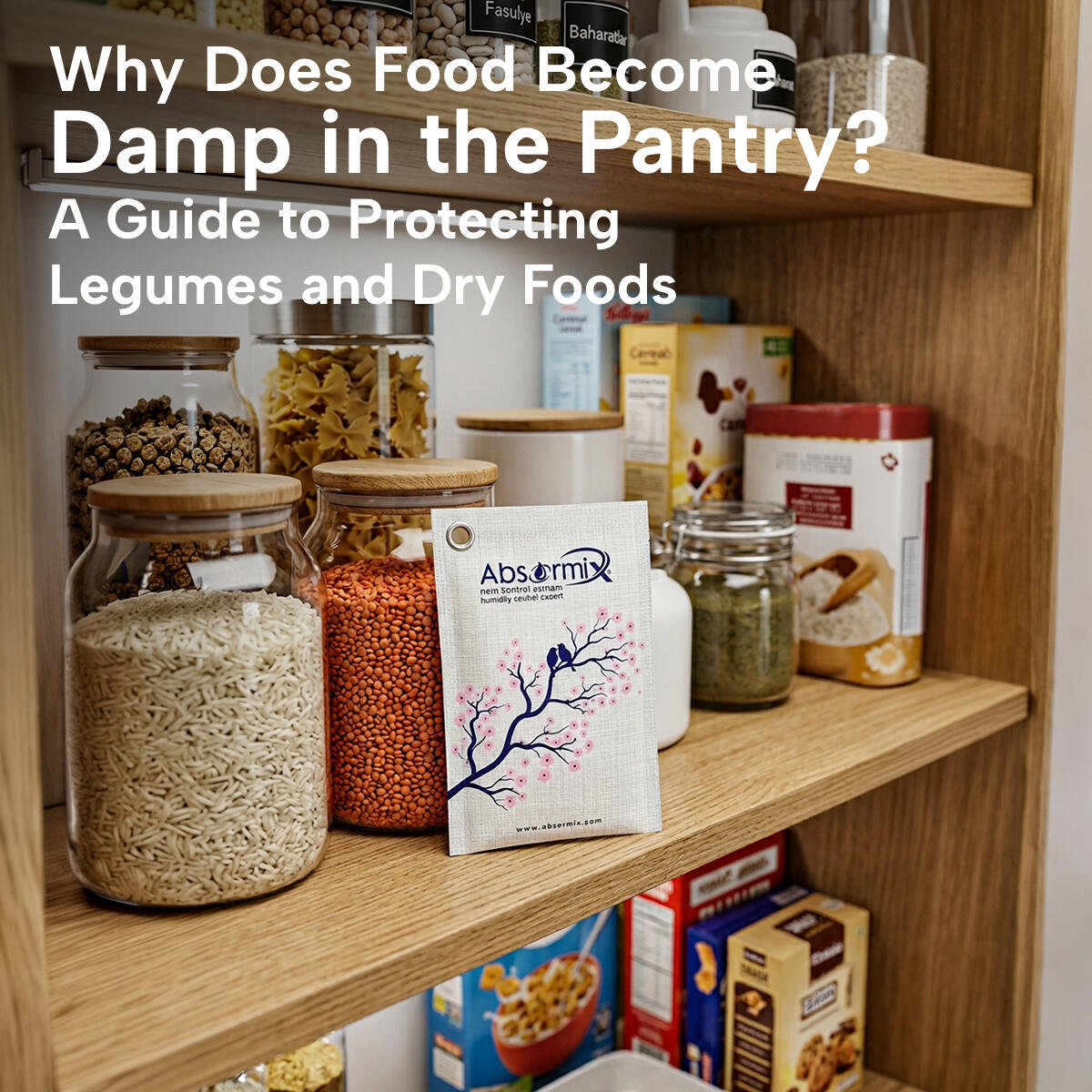
Absormix moisture absorber packs absorb excess moisture from the air and retain it inside the pack in gel form. In this way, they help keep excess moisture under control in the enclosed space where food is stored.
They can be used in pantries, cupboards, and other enclosed spaces where dry foods such as the following are stored:
- Pulses
- Rice
- Pasta
- Flour
- Spices
- Nuts
- Dried fruit
Important: Moisture absorber packs should not be placed inside food. Food should be kept in its own packaging or in suitable storage containers, while the moisture absorber pack should be used in the enclosed space where the food is stored.
How Does Moisture Control Help Protect Food?
Keeping excess moisture under control in the pantry helps maintain suitable storage conditions for food.
It also helps:
- Reduce the risk of clumping in flour and spices
- Prevent packaging from being affected by moisture
- Stop a damp environment from developing in the pantry
- Reduce unpleasant odours
- Keep dry foods in more suitable storage conditions
However, humidity is not the only factor that determines how long food can be stored. The product's expiry date, packaging, temperature, light, and storage conditions must also be taken into account.
Conclusion
One of the main reasons why food becomes damp in the pantry is excess moisture in the environment. Moisture control is particularly important in areas where pulses, flour, rice, pasta, spices, and other dry foods are stored for long periods.
Alongside regular ventilation, the use of suitable storage containers, and the elimination of potential sources of moisture, moisture absorber packs help keep excess moisture in the pantry under control.
Placed not directly inside food but in the enclosed spaces where food is stored, Absormix moisture absorber packs help absorb excess moisture. In this way, they support a dry and more suitable storage environment in the pantry.
