


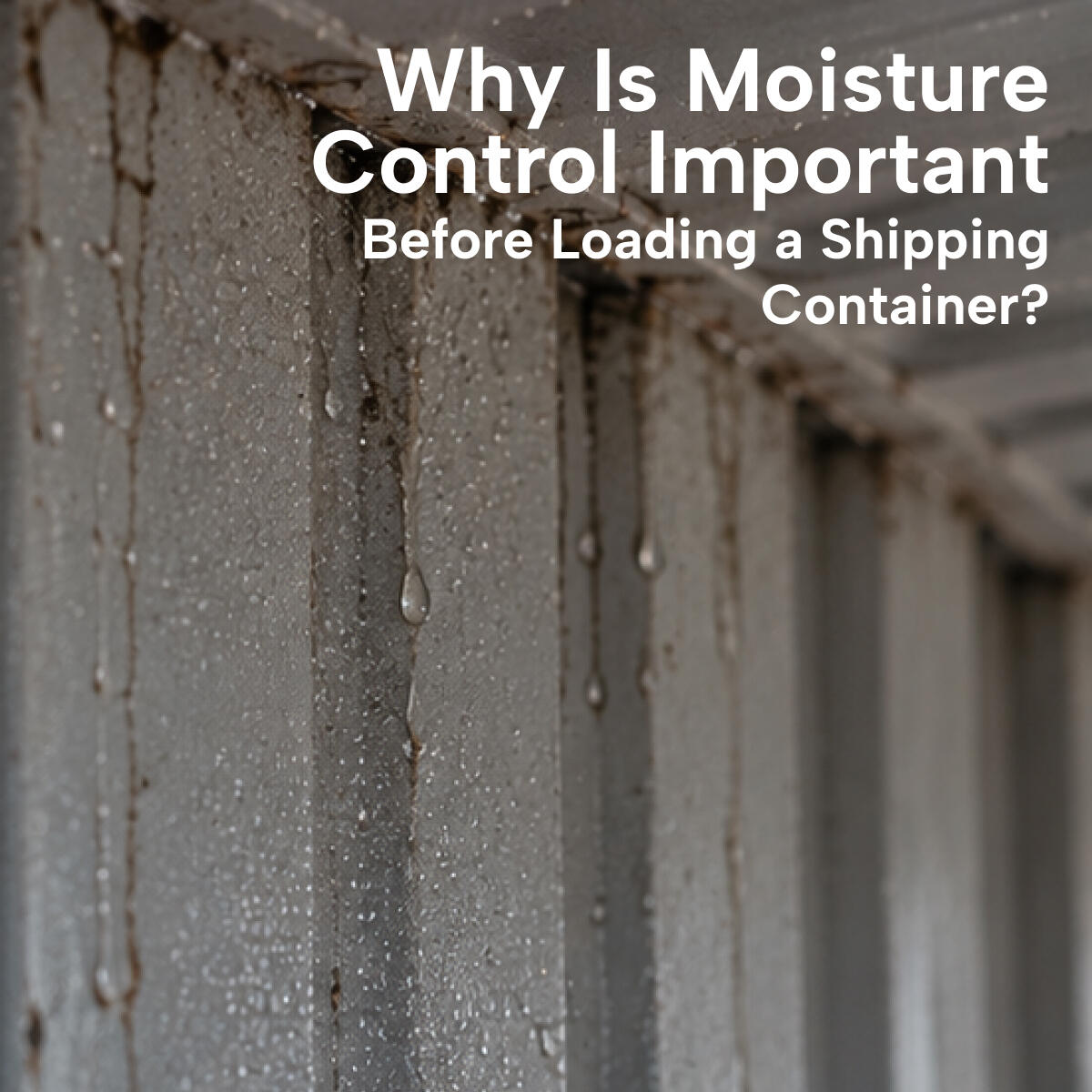
In sea freight, damage to goods is not always caused by physical impacts during transit. Excess moisture and condensation inside the container can also cause serious damage to products.
Particularly in containers that spend long periods at sea, the risk of moisture, damp, and condensation inside the container increases when temperature fluctuations, the moisture contained in the goods, and external conditions combine.
For this reason, checking packaging and stowage alone is not enough before goods are loaded into a container. Assessing both the container and the cargo for moisture is important for protecting products throughout the export process.
Why Is Moisture Control Important Before Loading a Container?
Once a container has been closed, air exchange inside it is very limited. Moisture that enters the container during loading, moisture released by the goods, and temperature fluctuations can all affect the moisture balance inside the container throughout the journey.
In long-distance sea freight in particular, temperature changes between day and night and between different climate zones can cause the water vapour inside to condense.
For this reason, assessing the moisture risk before the container is loaded helps reduce, in advance, the problems that may arise during transit.
Where Does Excess Moisture Inside a Container Come From?
Moisture inside a container does not have a single source. It can come from different sources both before and after loading.
The main sources of moisture are:
- Damp or insufficiently dried goods
- Wooden pallets and packaging materials
- Cardboard packaging that contains moisture
- Humid air entering the container during loading
- Temperature fluctuations inside the container
- Condensation forming during sea transport
- The container travelling through different climate conditions for long periods
For this reason, it is not only the dryness of the goods that matters; the packaging, the pallets, and the general condition of the container must also be taken into account.
What Can Happen Without Moisture Control?
When excess moisture inside a container is not controlled, a range of problems can arise, especially on long journeys.
Mould and Unpleasant Odours
High humidity and condensation can create favourable conditions for mould and unpleasant odours, particularly in textiles, wood, paper, cardboard, and similar moisture-sensitive products.
Packaging Damage
When cardboard boxes and other moisture-sensitive packaging materials absorb moisture, they can soften, lose their strength, and become deformed when stacked.
Deterioration in Product Quality
Textiles, furniture, wooden products, paper products, non-food dry goods, and a variety of industrial products can be affected by moisture. Moisture-related damage can mean that goods do not reach the customer in the expected condition.
Container Rain
As a result of temperature fluctuations, water vapour inside the container can condense on its surfaces, leading to what is known as container rain (also called container sweat).
This condensation forms on the ceiling and walls of the container and can drip onto the cargo.
What Should Be Checked Before Loading a Container?
Several basic checks should be carried out before loading to reduce the risk of moisture.
1. Inspect the Inside of the Container
The inside of the container should be checked for any existing moisture, water marks, rust, or signs of leaks.
It is important that the container is clean and dry.
2. Make Sure the Goods Are Dry
Loading damp goods or packaging into the container can increase humidity levels inside during transit.
Particular attention should be paid to the moisture condition of wooden pallets, wooden packaging, and cardboard materials.
3. Prevent Excess Moisture from Entering During Loading
Wherever possible, it is important to avoid loading an open container for long periods in rainy or very humid conditions.
This is because moisture that enters the container during loading can remain trapped inside once the doors are closed.
4. Measure Moisture Levels
For moisture-sensitive goods in particular, measuring moisture before loading allows the risk to be assessed more accurately.
The condition of the goods, the packaging, and the environment inside the container should be assessed together.
5. Plan Moisture Control for the Container
On long sea voyages, checks before loading may not be enough on their own. The risk of excess moisture and condensation developing during transit should also be taken into account.
At this point, using suitable moisture absorbers inside the container helps keep excess moisture under control.
Why Are Moisture Absorber Packs Used in Containers?
Once a container has been closed, moisture inside has little opportunity to escape. For this reason, it is important to control the excess moisture that may build up during transit.
Container desiccants help keep humidity levels under control by absorbing excess moisture inside the container. In this way, they help reduce the risk of condensation, mould, unpleasant odours, and moisture-related damage to goods.
Moisture control becomes even more important on long sea voyages, on routes with significant temperature fluctuations, and when shipping moisture-sensitive goods.
How Do Absormix Container Desiccants Work?
Absormix container desiccants absorb excess moisture inside the container thanks to their special calcium chloride and starch-based formulation.
The absorbed moisture is retained inside the pack and turns into gel. This helps keep moisture under control without any free liquid forming.
This feature is particularly important for reducing the risk of moisture inside containers during export shipments.
For Which Products Is Moisture Control Most Important?
Not all products are equally sensitive to moisture. However, particular attention should be paid to moisture control inside the container for the following product groups:
- Textiles and ready-to-wear clothing
- Footwear and leather goods
- Wooden products and furniture
- Paper and cardboard products
- Metal products
- Electronic and electrical equipment
- Machinery and spare parts
- Packaging materials
- Moisture-sensitive industrial products
In addition to the product itself, the packaging material and the length of the journey are also important when assessing moisture risk.
Pre-Loading Moisture Control Is a Precaution, Not a Cost
In exports, the cost of moisture-related damage may not be limited to the damaged goods themselves. Returns, reshipment, customer dissatisfaction, and delivery problems can also create additional costs for a business.
For this reason, a simple moisture check before the container is loaded, combined with a moisture control plan suited to the length of the journey, helps prevent the higher costs that may arise later.
Conclusion
Checking for moisture before loading a container is an important step in protecting export goods during transit. Ensuring the container is dry, checking the moisture condition of the goods, assessing loading conditions, and taking precautions against excess moisture that may build up during the journey should all be considered together.
On long sea voyages in particular, temperature fluctuations and the risk of condensation should not be overlooked. Proper moisture control and the use of container desiccants help keep excess moisture inside the container under control and reduce the risk of moisture-related damage to goods.
The right moisture control should be planned before loading begins, not after the goods are already in the container.
